
 Available in US
Content

Player Props Turn Individual Stats into Betting Markets
Two seasons ago, I noticed a forward who had been averaging 4.2 shots on goal per game was being lined at over/under 2.5 shots at most bookmakers. That disconnect — the bookmaker setting the line based on a league-average template rather than that specific player’s usage — is what player prop betting in the NHL is all about. You are not predicting who wins the game. You are predicting what one player does within the game, and that granularity creates opportunities the broader market misses entirely.
Football accounts for roughly 35% of global sports betting revenue, and its player prop markets are the most developed in the industry. Hockey’s player props are younger, thinner, and less efficiently priced. That immaturity is an advantage for bettors willing to do the research, because the bookmaker’s model has fewer data points and less sharp money correcting the line. The gap between the posted line and the actual probability is wider in NHL player props than in almost any other major sport.
Player Prop Markets in NHL Betting
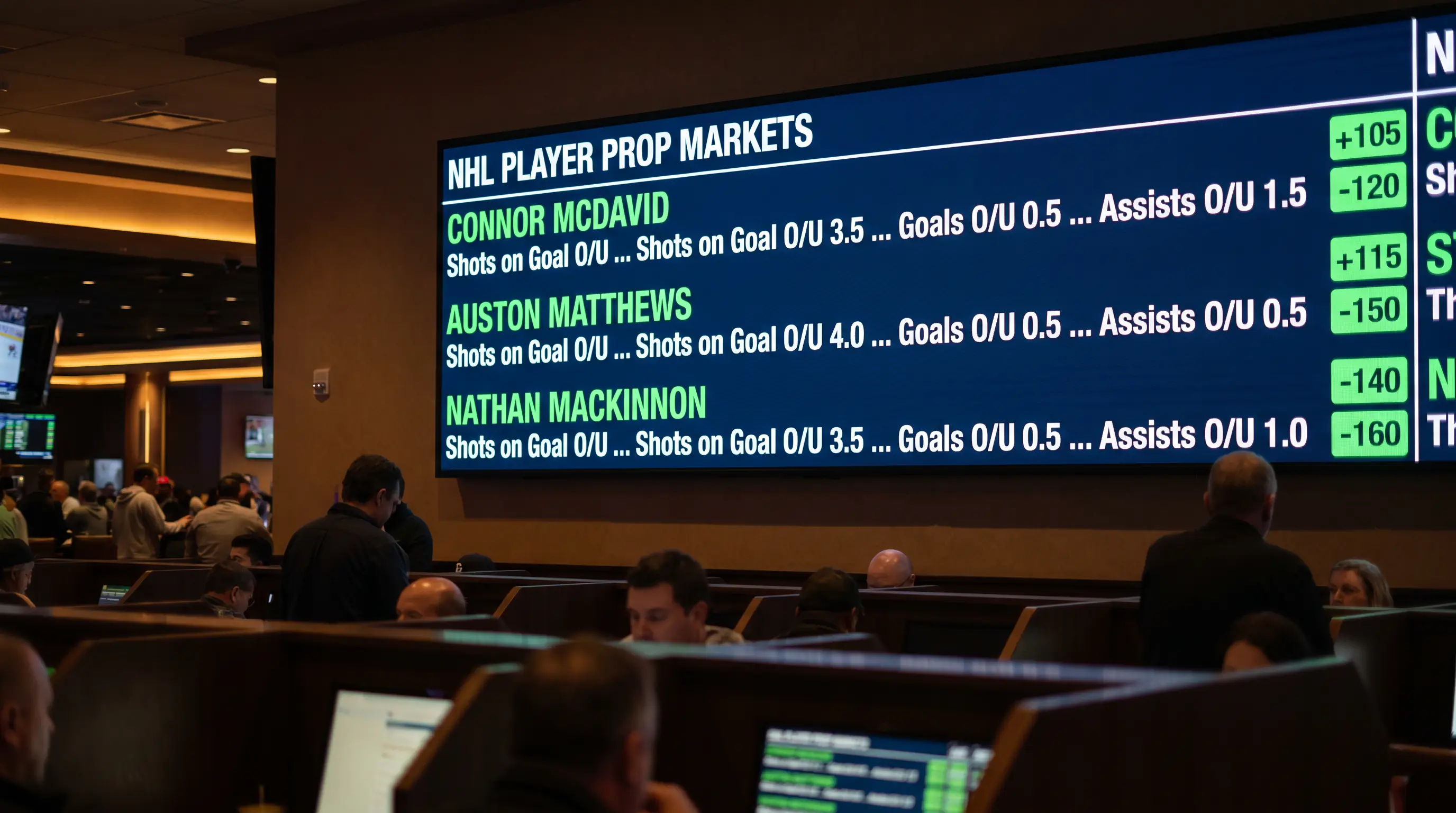
I catalogue every player prop type I encounter across UK bookmakers, and the list has grown substantially over the last three seasons. The core categories are goalscorer markets, shot-based markets, assist-based markets, and goaltender-specific markets. Each category operates on its own logic and requires its own analytical approach.
Goalscorer markets include anytime goalscorer, first goalscorer, and last goalscorer. Anytime goalscorer is the most popular: you back a player to score at least one goal during the game. The odds reflect the player’s scoring rate, with top-line forwards typically priced between 2.00 and 3.00 and bottom-six players between 5.00 and 10.00. First goalscorer odds are significantly longer because you need your player to score the specific opening goal, not just any goal.
Shots on goal over/under is the market I trade most frequently. The line is usually set at 2.5, 3.5, or 4.5 depending on the player. High-volume shooters on top lines consistently exceed 3.5 shots on goal, and the line does not always adjust to recent deployment changes. If a player has been elevated to the first power play unit — meaning more ice time in high-shooting-rate situations — the shots line can lag behind reality by a full game or two.
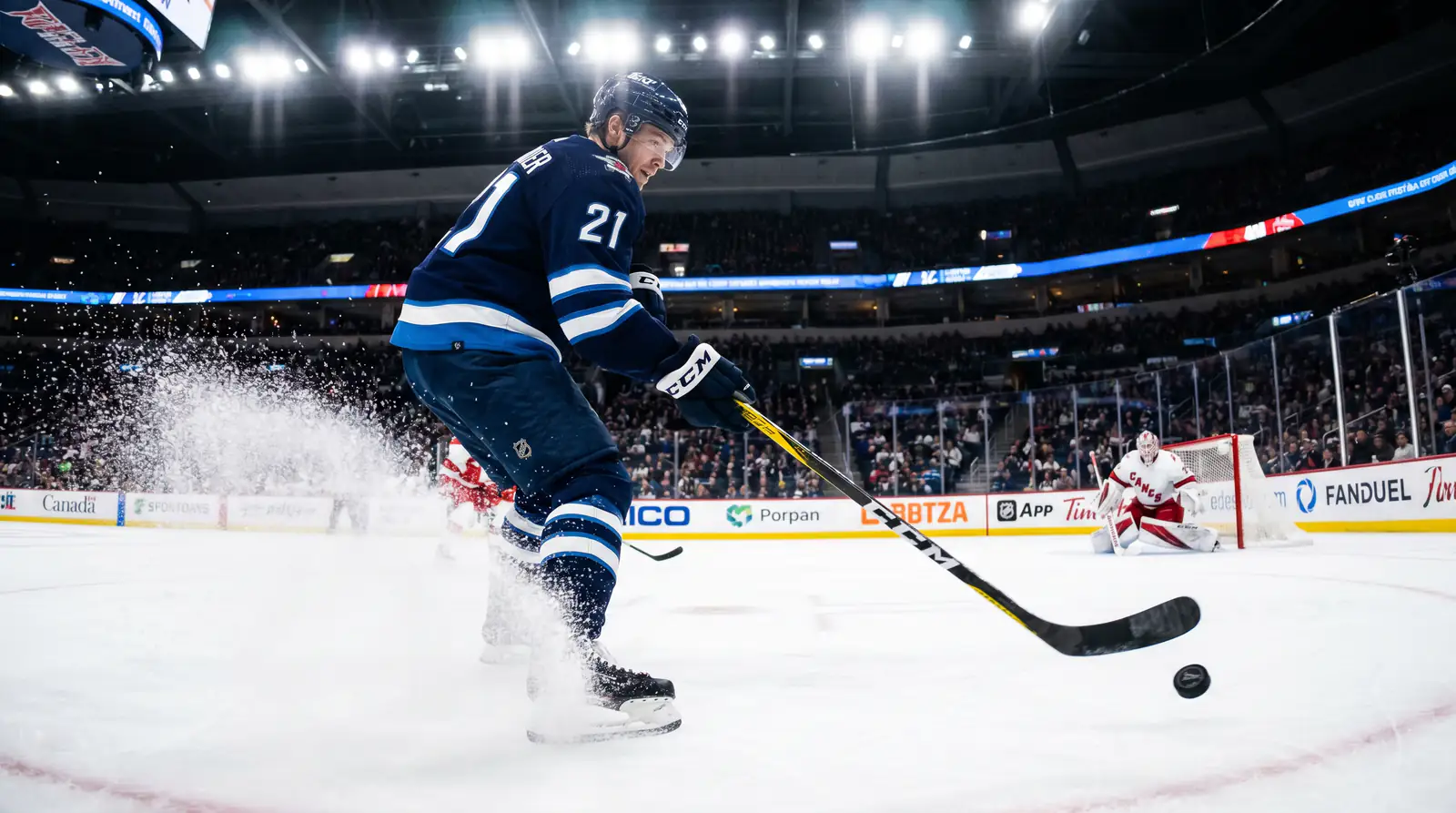
Assist-based props are newer and less widely available. You might see “player to record an assist” or “player to record 1+ points.” These markets favour playmakers on top lines and power play quarterbacks. The key stat to watch is primary assists per 60 minutes, not total assists, because primary assists are more repeatable and less influenced by random secondary assist luck.
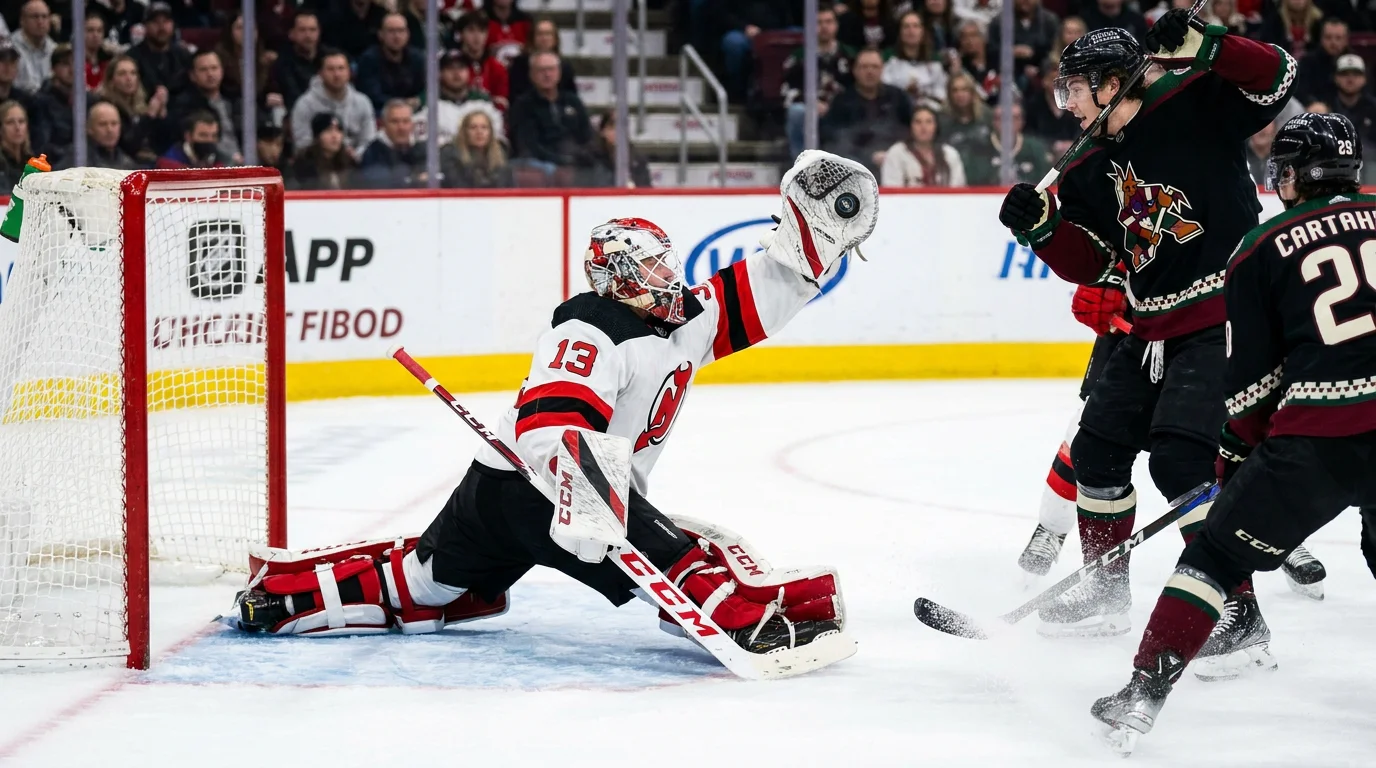
Goaltender save props — over/under on saves made — are an intriguing niche. A goaltender facing a high-volume shooting team will face more shots and record more saves regardless of how well he plays. The save line is usually set between 25.5 and 32.5 depending on the matchup. If you can estimate the shot volume the opposing team will generate, you can assess the save prop with reasonable confidence.
Researching Player Props: Stats, Matchups, and Line Combinations
The first thing I do before betting any player prop is check the line combinations from morning skate. I have lost count of how many times a player I was targeting for a shots prop had been dropped from the first line to the third line, cutting his ice time from 20 minutes to 13. That single change flips the entire calculus of the prop, and it happens more often than casual bettors realise. The 2024-25 NHL season drew record attendance of over 23 million fans, and that mainstream attention has increased the volume of line combination reporting, making this information more accessible than ever.
After confirming deployment, I look at the matchup. A forward facing a top-tier shutdown defenceman will generate fewer quality chances than one facing a third-pair defenceman. I track defensive pair deployment by team and cross-reference which opposing forwards they shadow. This level of detail sounds obsessive, but player props reward obsession because the bookmaker’s model cannot capture every coaching adjustment.

Venue matters more than you might think. Some arenas have notoriously generous shot-counting — the home team’s statistician decides what qualifies as a “shot on goal,” and the interpretation varies. Players on certain teams might see their shot-on-goal totals inflated at home relative to the road. If you are betting shots props, home/away splits give you a meaningful additional layer of information.
I also factor in game context. Is this a nationally televised game where coaches tend to shorten benches and lean on their top players? Is it a rivalry game where physical play might limit clean shooting opportunities? Is either team on a back-to-back where the coach might rest his top centre for a few shifts? These situational factors influence individual player performance in ways that aggregate season-long stats do not capture.
Common Traps in NHL Player Prop Betting
The biggest trap I fell into early on was recency bias. A player scores a hat trick on Tuesday, and by Thursday his goalscorer prop is the most popular bet on the board. The bookmaker responds by shortening his odds, and the value evaporates. Chasing a player’s last performance is the surest way to bet into an overpriced line. I now enforce a rule: if a player’s prop odds have shortened by more than 15% compared to his season average in the 24 hours before a game, I skip it regardless of how good the narrative sounds.
The second trap is ignoring sample size. A player who has gone over 3.5 shots in four consecutive games might be on a hot streak, or he might simply be returning to his baseline after a cold stretch. I require at least a 20-game rolling average before treating a shots or goals trend as signal rather than noise. Anything shorter is just randomness wearing a pattern’s clothes.
The third trap is correlation blindness. If you bet a player to score a goal and also bet the game total over, those bets are correlated — a goal from your player contributes to the total. That is fine if you understand the correlation and account for it in your staking, but many bettors treat them as independent events and overexpose themselves to correlated outcomes without realising it. Managing this overlap is a basic risk management skill that separates disciplined prop bettors from the rest.

NHL Player Prop Questions
What NHL stats should I check before betting on player props?
Start with the player’s shots on goal per game, shooting percentage, power play deployment, and line placement. Cross-reference with the opposing team’s defensive metrics and the specific defenceman likely to match up against your player. Morning skate line combinations and goaltender confirmations are essential final checks before placing the bet.
Are NHL player props available at UK bookmakers for regular-season games?
Yes. Most major UK-licensed bookmakers offer player props for NHL regular-season games, particularly for marquee matchups. The depth of coverage varies — some operators list 20+ player props per game while others limit it to goalscorer markets only. Playoff games typically have the widest player prop selection.
