
 Available in US
Content
The NHL Monitors Every Minute of Every Game for Betting Anomalies
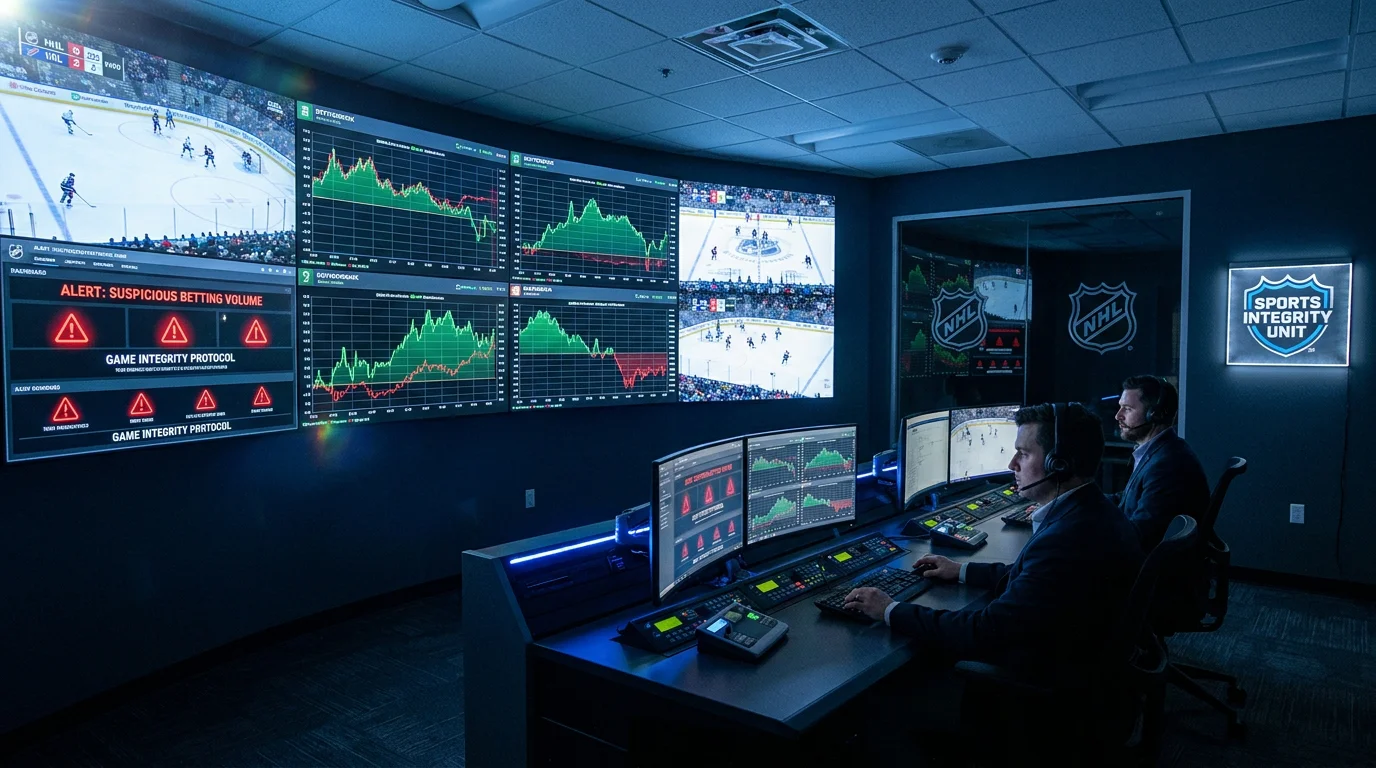
A few years back, a conversation with someone working in sports integrity monitoring gave me a perspective I had not considered. He described how the NHL’s approach to betting integrity is closer to financial market surveillance than anything most sports fans imagine. Every game, every line movement, every unusual betting pattern is tracked and cross-referenced against on-ice events. The NHL and CFTC signed a memorandum of understanding for two-way information sharing in May 2026 – the latest step in a multi-layered integrity framework that has been building since the league first embraced legal sports betting.
For bettors, integrity matters because it determines whether the prices you are betting into reflect genuine competition. A league with weak integrity controls is one where outcomes can be manipulated, rendering your analysis worthless. The NHL’s investment in monitoring, data sharing, and regulatory partnerships gives bettors confidence that the games they are wagering on are legitimate contests, not scripted events.
The NHL’s Multi-Layer Integrity Framework
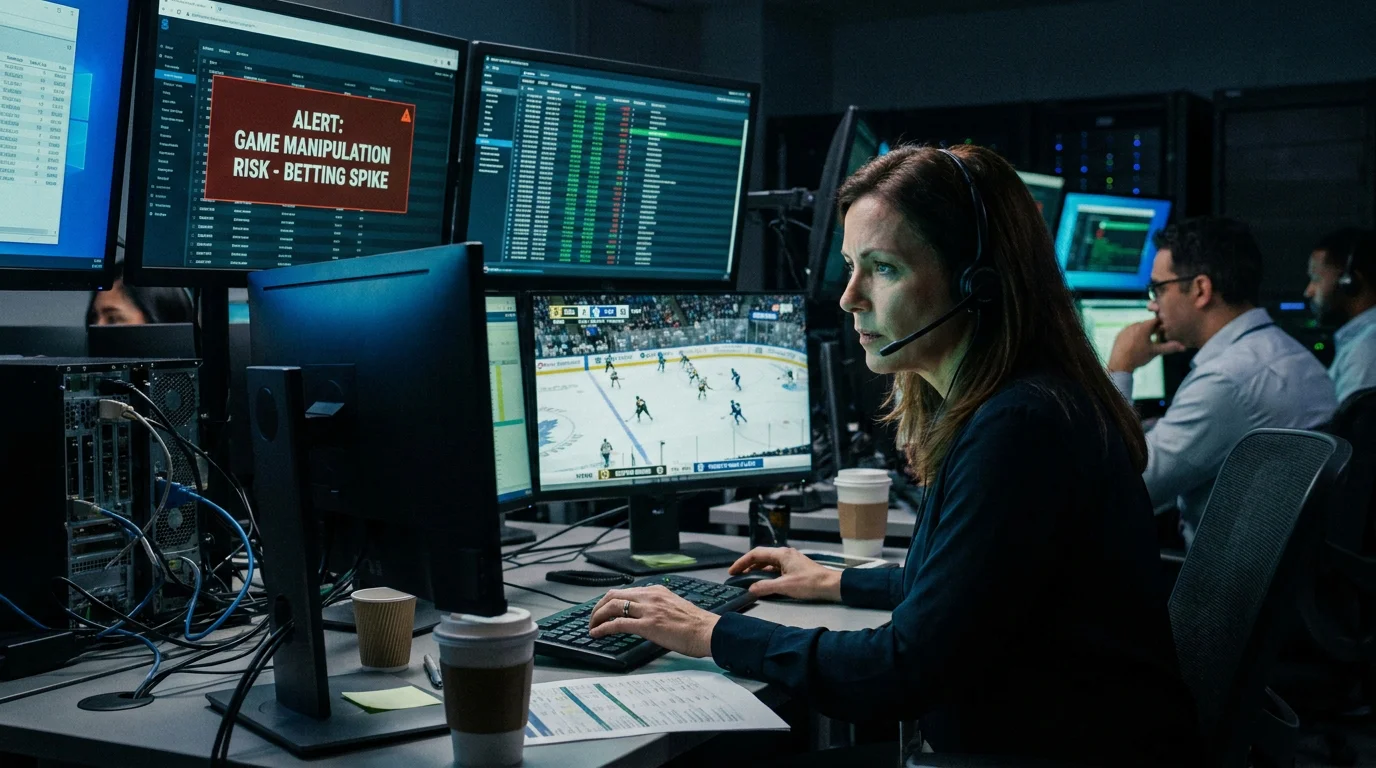
The integrity structure the NHL has built is more sophisticated than what I see in most other leagues. It operates on multiple levels simultaneously, each designed to catch different types of threats.
At the player and personnel level, the NHL maintains strict rules about who can and cannot bet on hockey. Players, coaches, officials, and league employees are prohibited from placing wagers on NHL games. The penalties for violations are severe and publicly communicated, creating a deterrent that goes beyond the written rules. This is not unique to the NHL, but the enforcement mechanisms are particularly robust – the league has hired dedicated compliance officers and requires regular education sessions for all personnel.

At the market level, the NHL works with independent integrity monitoring services that track betting activity across global sportsbooks. In October 2025, the NHL partnered with Kalshi and Polymarket, adding prediction market data to its surveillance inputs. These services flag anomalous line movements – a sudden shift in the moneyline without a corresponding injury or roster change, for example – and alert the league’s security team for investigation. Most flagged events turn out to be harmless (sharp money from a large bettor, or a delayed public reaction to a goaltender announcement), but the system is designed to catch the rare genuine threat.
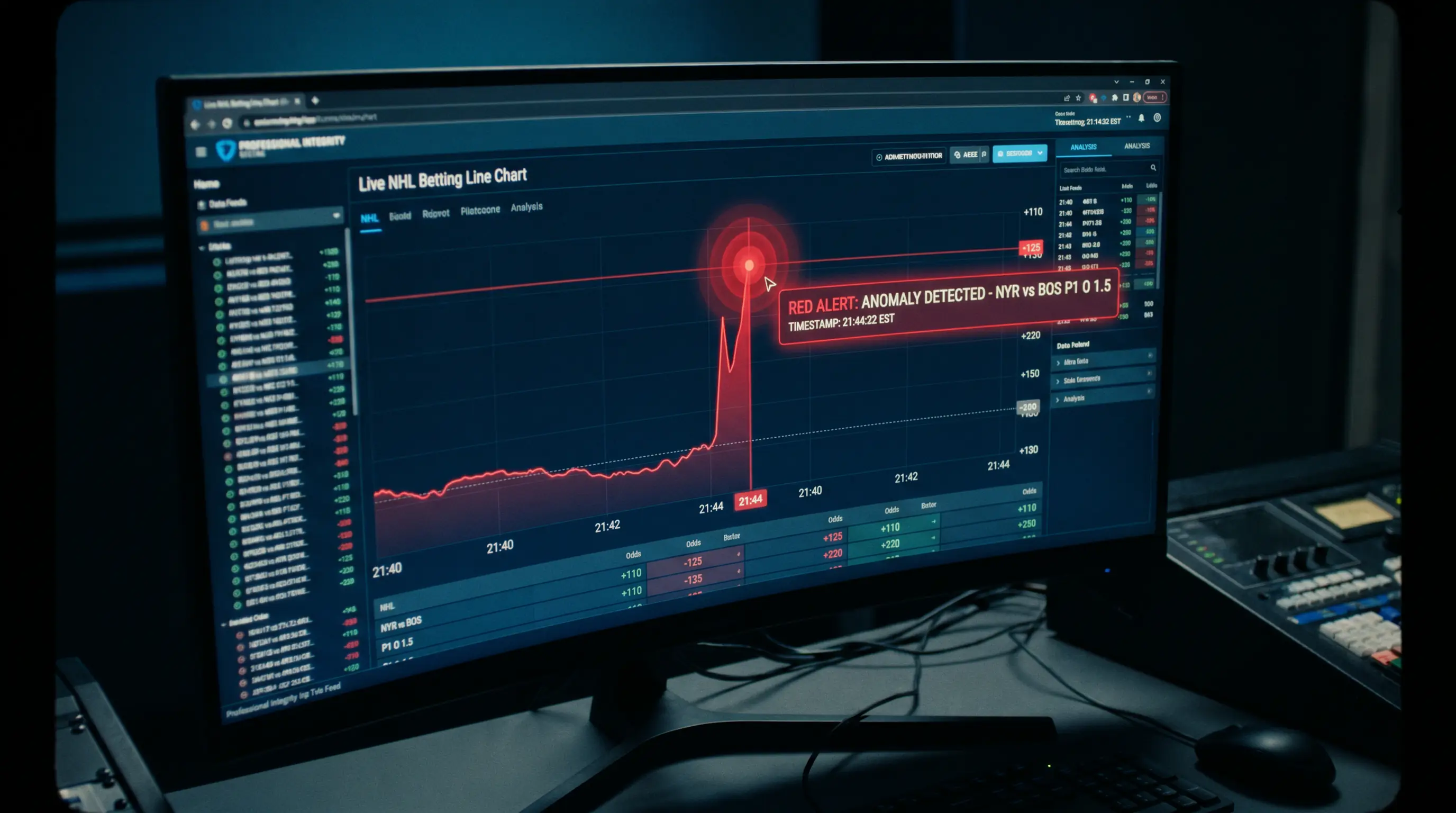
At the regulatory level, the CFTC memorandum represents a new frontier. The two-way data sharing means the NHL provides game-level data to the CFTC (for monitoring prediction market activity), and the CFTC provides market data to the NHL (for detecting suspicious prediction market trading). This bidirectional flow is unique in professional sports and gives the NHL a surveillance advantage that other leagues have not yet replicated.
The CFTC Memorandum: Two-Way Data Sharing
I spent time reading the publicly available details of the NHL-CFTC memorandum when it was announced, and the implications for the betting ecosystem are significant. The agreement creates a formal channel for information exchange that did not previously exist between a sports league and a financial regulator.
From the NHL’s side, the league shares detailed game data – rosters, injuries, lineup changes, scoring plays, and penalty information – with the CFTC in real time or near-real time. This data allows the CFTC to contextualise any unusual trading activity in Kalshi or other regulated event contract markets. If a prediction market contract on a specific game outcome experiences a sudden price spike, the CFTC can check whether a corresponding on-ice event (an injury, a goaltender change) explains the movement.

From the CFTC’s side, the regulator shares aggregated market activity data that might indicate manipulation attempts. If someone places an unusually large position on a specific outcome in a prediction market and that outcome subsequently occurs under suspicious circumstances, the CFTC can flag the activity and share the relevant data with the NHL for investigation. This reciprocal arrangement closes a gap that existed when sports betting data and financial market data flowed through separate, unconnected channels.
For UK bettors, the practical takeaway is confidence. A league that invests this heavily in integrity monitoring is a league where the games are overwhelmingly clean. Your analysis of goaltending, schedule spots, and market value is meaningful precisely because the outcomes are determined by on-ice competition, not off-ice manipulation.
How the UKGC Regulates Hockey Betting
Across the Atlantic, UK hockey bettors benefit from one of the world’s most comprehensive regulatory frameworks. The UK Gambling Commission licences and oversees every bookmaker that offers hockey markets to UK customers. The total Gross Gambling Yield of the British gambling industry was $4.5 billion in Q4 2025 alone, and the UKGC’s regulatory apparatus is scaled to match that market size.
Every UKGC-licensed operator must comply with standards that cover market integrity, customer protection, anti-money laundering, and responsible gambling. For hockey specifically, this means the odds you see on NHL and EIHL markets at a licensed bookmaker are set within a regulated framework that prohibits market manipulation, requires fair terms, and mandates transparent settlement rules.
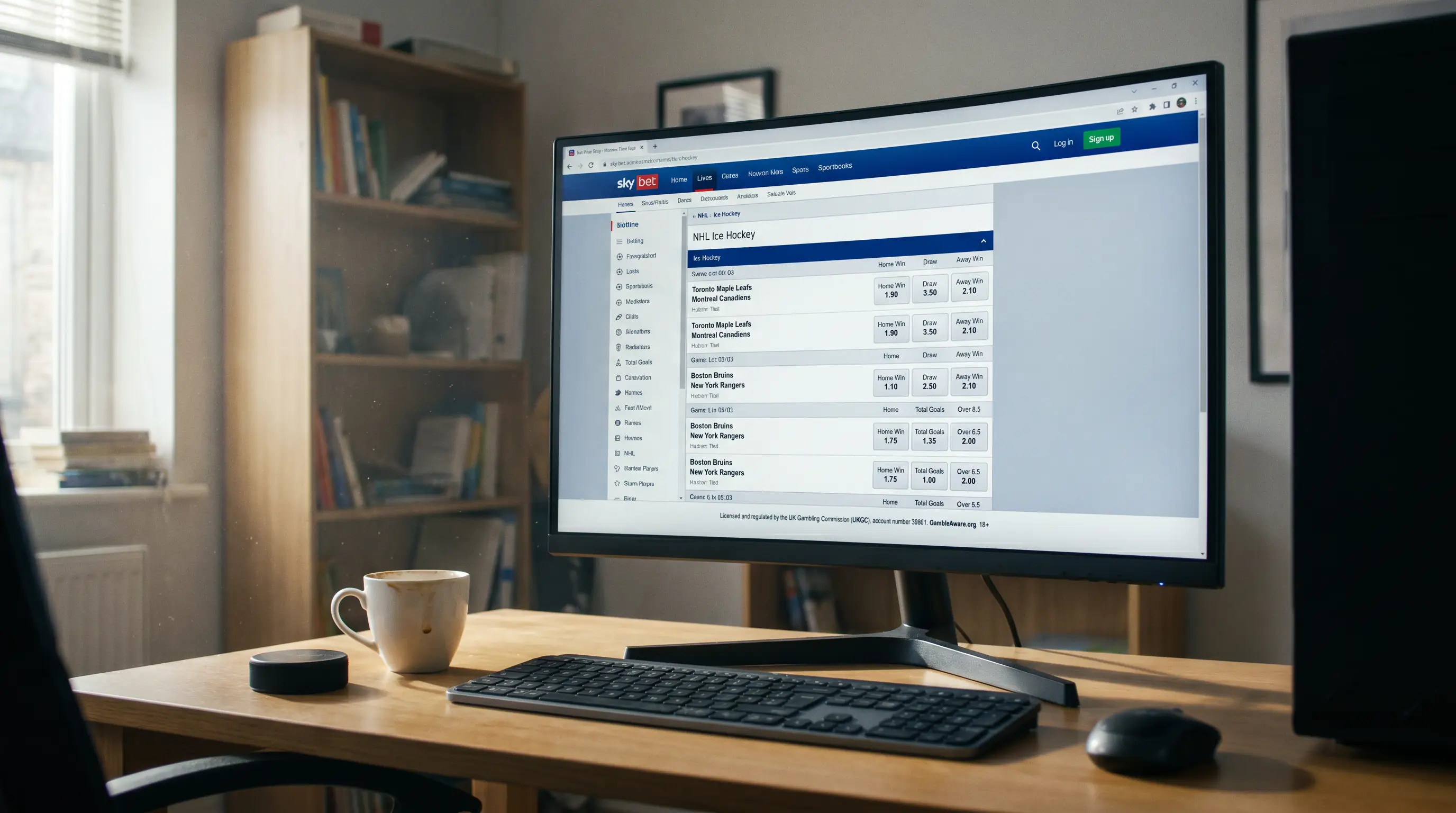
The UKGC also participates in international information-sharing agreements with sports integrity bodies. If the NHL’s monitoring system detects a suspicious betting pattern originating from a UK-based bettor, the UKGC can investigate through its licensed operators and take enforcement action. This cross-border cooperation adds another layer of protection that makes the UK betting environment one of the safest in the world for hockey wagering.
The regulatory framework extends to advertising and promotion as well. Licensed operators cannot make misleading claims about odds or outcomes, and promotional offers on hockey markets – enhanced accumulators, free bet offers, money-back specials – must comply with strict terms-and-conditions transparency. If a promotional market carries non-standard settlement rules, the operator must disclose them clearly. This protects bettors from hidden conditions that could invalidate what appears to be a winning wager, which is a common tactic among unregulated offshore operators.
Understanding the regulatory landscape also helps you protect yourself. Betting with UKGC-licensed operators ensures your funds are held in segregated accounts, your disputes have a formal resolution process, and your personal data is handled under strict privacy standards. Straying to unlicensed offshore operators – a risk covered in more detail elsewhere – strips away these protections entirely. The licence is not a badge – it is a guarantee of operational standards that directly affect whether your winning bets get paid.

Betting Integrity Questions
Has there ever been a match-fixing scandal in the NHL?
The NHL has not experienced a confirmed match-fixing scandal in the modern era. The league’s multi-layered integrity framework, strict rules prohibiting personnel from betting, and partnerships with monitoring services and the CFTC are designed to prevent and detect any manipulation attempts. The sport’s competitive structure – fast pace, randomness, and goaltending variance – also makes fixing outcomes far more difficult than in lower-scoring or individual-performance-dependent sports.
How does the UKGC protect hockey bettors in the UK?
The UKGC requires all licensed bookmakers to comply with standards covering fair market practices, transparent odds and settlement rules, customer fund protection, anti-money laundering measures, and responsible gambling tools. The Commission also participates in international integrity-sharing agreements, meaning suspicious betting patterns flagged by the NHL or other bodies can be investigated through UK-licensed operators.
