
 Available in US
Content

Playoff Hockey Plays by Different Rules — and So Should Your Betting
The first time I applied my regular-season models to a playoff series, I got destroyed. Three of my first four bets lost, and the margins were not even close. It took me two full playoff cycles to understand that post-season hockey is a fundamentally different sport — and the betting approach that works from October to April can actively hurt you once the brackets are set.
Viewership numbers confirm the shift in intensity. The Western Conference Final in 2026 averaged 2.2 million viewers over four games on ESPN — a 44% increase over the prior year. That surge is not just casual fans tuning in for the spectacle. It reflects a product that genuinely changes character when elimination is on the table. The speed, physicality, and tactical density all ratchet up, and any betting framework that does not account for those changes is working with the wrong inputs.
Playoff hockey rewards different traits than the regular season. The teams that grind, block shots, and get elite goaltending tend to outlast the squads built purely on offensive firepower. Your betting has to respect that shift.
Regular Season vs Playoff Betting: Key Differences
During the regular season, I lean heavily on expected-goals models, power play efficiency, and schedule-adjusted metrics. Those tools still matter in the playoffs, but their predictive power drops significantly because the game itself changes. Here are the structural differences that reshape the betting landscape.
First, the pace slows. Regular-season hockey tolerates risk because losing a single game in an 82-game campaign is insignificant. In a best-of-seven series, every game matters, and coaches tighten their systems accordingly. Forechecking becomes more conservative, neutral-zone traps reappear, and odd-man rushes are traded for controlled breakouts. The result is fewer high-danger chances per game and lower scoring — which directly affects totals markets.
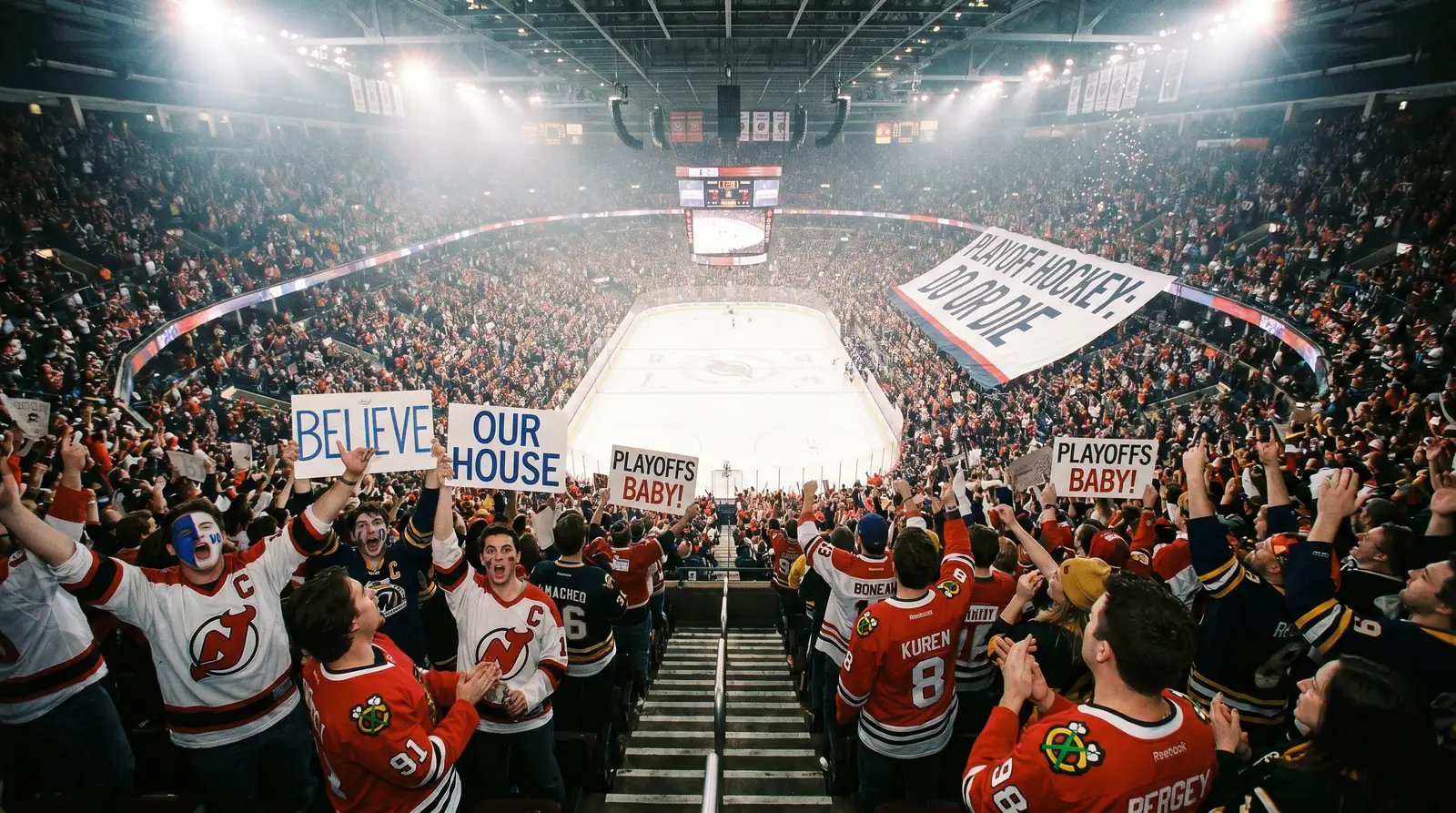
Second, goaltending dominance intensifies. Starters play every game unless injured, and the best netminders — the ones with playoff pedigree — elevate their performance when the stakes rise. Arena atmospheres reach a different pitch too. NHL regular-season gate receipts already run at 96% capacity, but playoff games exceed 100% by opening standing-room sections. That wall of noise affects both teams, though history suggests the home side feeds off it more consistently.
Third, officiating changes. Referees swallow their whistles in the playoffs, allowing more physical play before calling penalties. Power play opportunities decline, which means teams reliant on the man advantage to generate offence see their production drop. If your regular-season model weights power play percentage heavily, that variable needs to be dampened — or replaced — for playoff projections.

Finally, the information environment is different. Injury reports become vague, lineup changes are closely guarded, and insider access matters more than it does in the regular season. A confirmed injury to a top-four defenceman might not surface until warm-ups, and the line may not adjust until minutes before puck drop.
Series-Level Markets: Correct Score, Series Winner, and Game Props
One of the reasons I enjoy playoff betting more than regular-season action is the depth of available markets. During a seven-game series, you can bet on outcomes that simply do not exist in the regular season — and several of them carry structural advantages for bettors who do their homework.
Series winner is the most straightforward market and the one where your research pays off most directly. Instead of predicting a single sixty-minute outcome, you are predicting the aggregate result of up to seven games, which smooths out variance and rewards genuine analysis. If you believe one team is 5% more likely to win than the odds suggest, that edge compounds across a full series in a way it cannot in a single game.
Correct series score — picking the exact number of games in the series — offers significantly higher odds. A 4-1 series victory might be priced around 5.00, while a 4-3 result could sit near 3.50. The key insight is that closely matched teams produce longer series, while mismatches end quickly. If you can accurately assess the talent gap between two clubs, you can identify correct-score value that the market misprices. Revisiting Stanley Cup odds at each round gives you a running picture of how the market is repricing the remaining contenders.

Game-specific props — who scores first in Game 5, the over/under on a particular game within the series — offer value when you track momentum. Series that reach Game 6 or 7 tend to produce tighter, lower-scoring contests as desperation sets in. The 2026 Western Conference Final drew that 2.2-million average in part because the series went the distance, with each game progressively more intense than the last. Totals tend to drift lower as a series deepens, and bettors who recognise that pattern can find value on unders in elimination games.
Playoff Betting Trends: Totals, Underdogs, and Goaltending
Gary Bettman has spoken publicly about his concern that gambling affects the perception of the NHL game and challenges its integrity. That caution is worth noting, because the league has taken deliberate steps to maintain competitive balance — and that balance creates specific patterns that bettors can track.
Totals drop in the playoffs. The regular-season average sits around six goals per game, but playoff averages typically fall to 5.3 or 5.4. That half-goal difference is enormous in a market where the standard total is set at 5.5 or 6. Books adjust for this, but not always aggressively enough in the early rounds, when the “excitement tax” from casual bettors pushes overs. First-round totals are the most commonly mispriced, because the public assumes playoff hockey will be as open as the games they watched in March.
Underdogs perform differently in the playoffs than in the regular season. The parity that produces 39.1% outright underdog wins during the regular season tightens further in the post-season, where lower-seeded teams are more motivated and better prepared than their regular-season record might suggest. Home underdogs in particular — teams that lost the first two games on the road and return home facing elimination — cover at a rate that consistently exceeds market expectations.

Goaltending is the single most predictive factor in a playoff series. A hot goaltender can carry a less-talented roster deep into the bracket, and the best playoff runs in recent memory have been anchored by goalies posting save percentages above .930 for an entire round. I track goalie performance rolling through the series — if a netminder is stopping 94% of shots through the first three games, the market rarely reflects that level of dominance in the Game 4 line. That is where the edge lives.

The playoffs reward patience. One or two well-placed bets per round, grounded in genuine analysis, will outperform a scattergun approach every single year.
NHL Playoffs Betting Questions
Do NHL playoff games go to a shootout?
No. NHL playoff games that are tied after regulation go to sudden-death overtime periods of twenty minutes each until a goal is scored. There is no shootout in the playoffs, which means games can extend significantly and overtime betting markets carry unique value.
How does home ice advantage change in the NHL playoffs?
Home ice advantage becomes more pronounced in the playoffs. The higher-seeded team gets home ice for Games 1, 2, 5, and 7 in a best-of-seven series. Playoff arenas exceed capacity with standing-room additions, and the atmosphere creates a measurably hostile environment for the visiting team. Home teams win at a higher rate in the playoffs than during the regular season.
