
 Available in US
Content
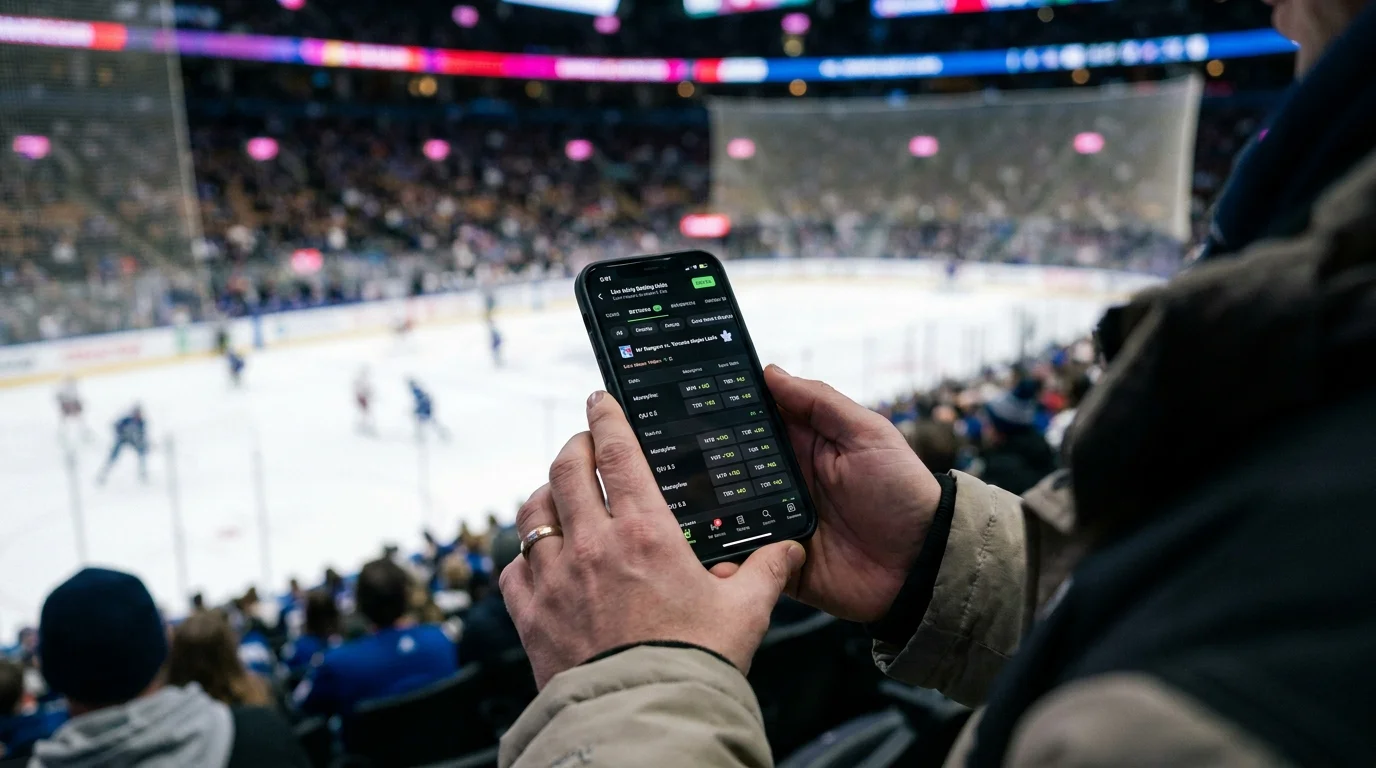
Hockey’s Stop-Start Pace Makes It Ideal for Live Betting
The first live bet I ever placed on hockey was during a power play in the second period. The trailing team had pulled within one goal and had a two-minute man advantage. I grabbed the live moneyline on the trailing side at 3.20, they scored 40 seconds later, and the line crashed to 2.10 within moments. That speed of change is what makes hockey’s in-play market so different from football or cricket, where the rhythm is slower and the odds adjust gradually. Hockey gives you sharp, discrete moments — stoppages, period breaks, penalty calls — where the live market resets and value appears.

Roughly 60% of sports bettors now use mobile apps as their primary platform, and in-play betting is the feature that makes mobile indispensable. An NHL game generates dozens of natural pauses: whistles for icings, offsides, goals, penalties, TV timeouts, and the 18-minute intermissions between periods. Each pause is a decision point where the bookmaker recalculates and you can act. Compare that to a sport like basketball where the action is nearly continuous and the live odds move in a blur. Hockey’s structural rhythm is tailor-made for considered in-play wagering.
Live Markets Available During an NHL Game
I have tracked which live markets are available at five different UK bookmakers across a dozen NHL games, and the variation is wider than you might expect. The basics are universal: live moneyline, live total, and next goal scorer. Beyond that, coverage diverges sharply.
The live moneyline is the anchor market. It updates after every goal and during stoppages, reflecting the current score, time remaining, and each team’s momentum. The live total adjusts downward as the game progresses and goals are scored — if the pre-game total was 6.5 and the score is 3-2 midway through the second period, the live total might shift to over/under 1.5 remaining goals.
Next goal scorer is a popular market that opens after each goal or at the start of each period. The odds reflect individual player deployment — who is on the top line, who is running the power play — and adjust based on game context. Some bookmakers also offer “next team to score,” which is a simpler version of the same concept without tying it to a specific player.
Period-specific markets — current period winner, current period total — are available at most operators for NHL games but rarely for EIHL. These are useful if you have a read on how the game’s tempo is evolving. A first period that produces zero goals might signal tight goaltending, making the second period under an attractive live play.
More exotic live markets include “will there be overtime,” “total goals in the third period,” and “next penalty.” These carry wider margins and lower limits, but they represent genuine value pockets when you have specific situational knowledge — like knowing that a particular referee crew tends to call more penalties in the third period of close games.
Optimal Timing: Period Breaks, Power Plays, and Empty Nets
A fellow bettor once described live hockey betting as “fishing” — long stretches of watching and waiting, punctuated by brief windows where you cast. That analogy resonated because the worst thing you can do in live betting is chase action. The best live bettors I know place two or three in-play wagers per game at most, and they are all timed around specific events.
Period breaks are the most underrated entry point. The 18-minute intermission gives the bookmaker time to recalculate, but it also gives you time to assess. How did the shot differential look in the period just completed? Did one team dominate territorially despite the score being level? The online segment contributed roughly 75% of global sports betting revenue in 2025, and a significant portion of that activity clusters around these natural intermission windows when bettors reassess and re-engage.
Power plays create the sharpest short-term odds swings. When a team goes on the man advantage, their live moneyline shortens immediately. But here is the nuance: if the power play expires without a goal, the line reverts — often to a slightly worse position for the penalised team than it was before the call. That post-penalty snap-back is a live betting angle I use regularly. The team that just killed a penalty often rides a surge of momentum, and their live price in the 30 seconds after the penalty kill ends is frequently an overreaction the other way.
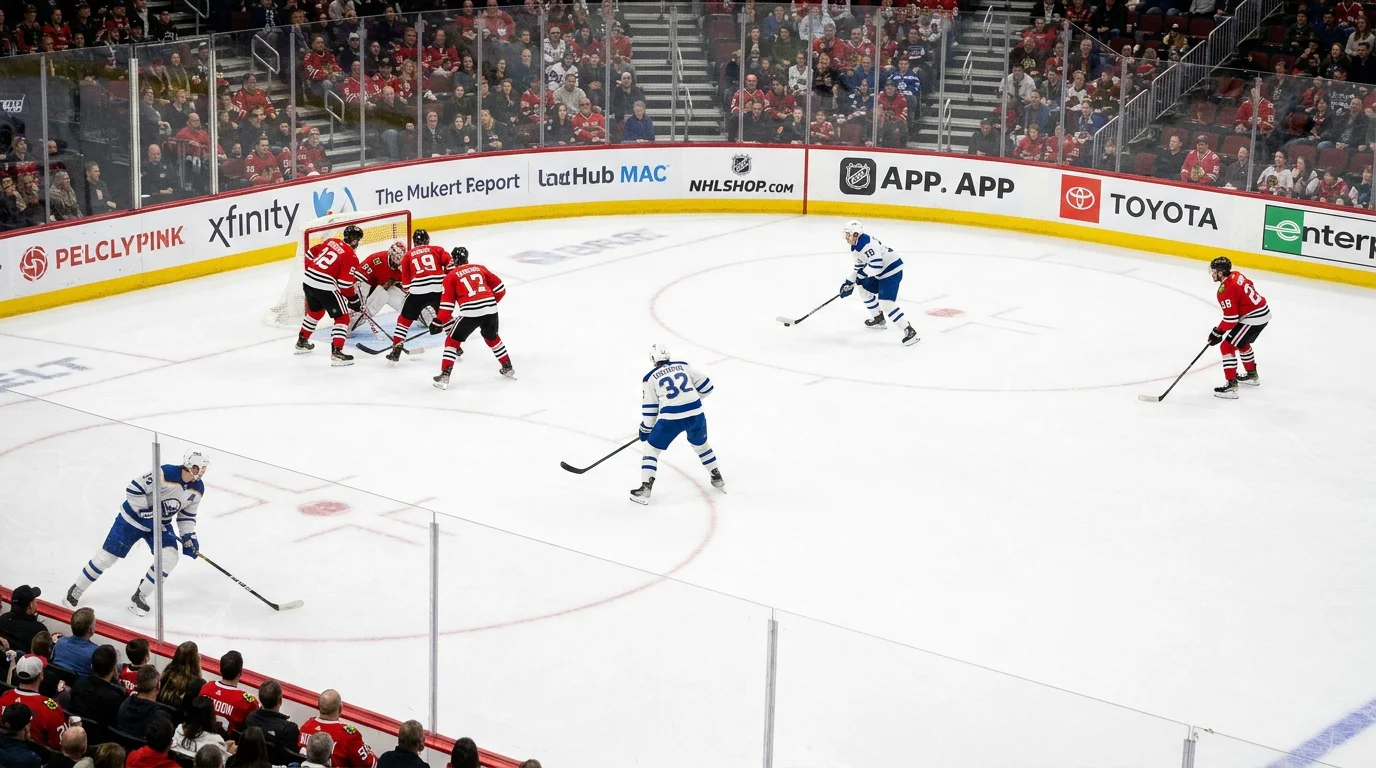
Empty-net situations in the final two minutes of a close game are the highest-variance live betting moments. The trailing team pulls their goaltender, creating a six-on-five advantage but also opening themselves to an empty-net goal. The live total “over” price drops aggressively during empty-net play because the probability of another goal — in either direction — spikes. If the game total is sitting right on the number, the empty-net window can present a value over bet at compressed odds.

The connection between live betting and period-level markets is direct: if you track period scoring tendencies for specific teams, you enter the live market with a framework that gives you an edge over bettors reacting purely to the scoreboard.
What to Look for in a Live Hockey Betting Platform
I switched my primary bookmaker for live hockey twice in the last three years, both times because of platform speed. In live betting, the difference between placing a bet at 2.40 and seeing it bounce to 2.20 while your request processes is the difference between value and dead money. Speed is not a luxury; it is the prerequisite.
The first thing I test is latency — how quickly the odds update after a goal or stoppage. Some platforms lag by 10 to 15 seconds, which means the price you see is stale. Others refresh within two to three seconds. For in-play hockey betting, you want the faster platforms because the window of value after an event is narrow.
Market depth matters too. A platform that only offers live moneyline and total gives you limited options. One that includes next goal scorer, period markets, and team-specific props during the game gives you a wider palette to express your read on the match. Check this before committing to a bookmaker for your live hockey activity — not all operators offer the same range, and the gaps become apparent only during the game.
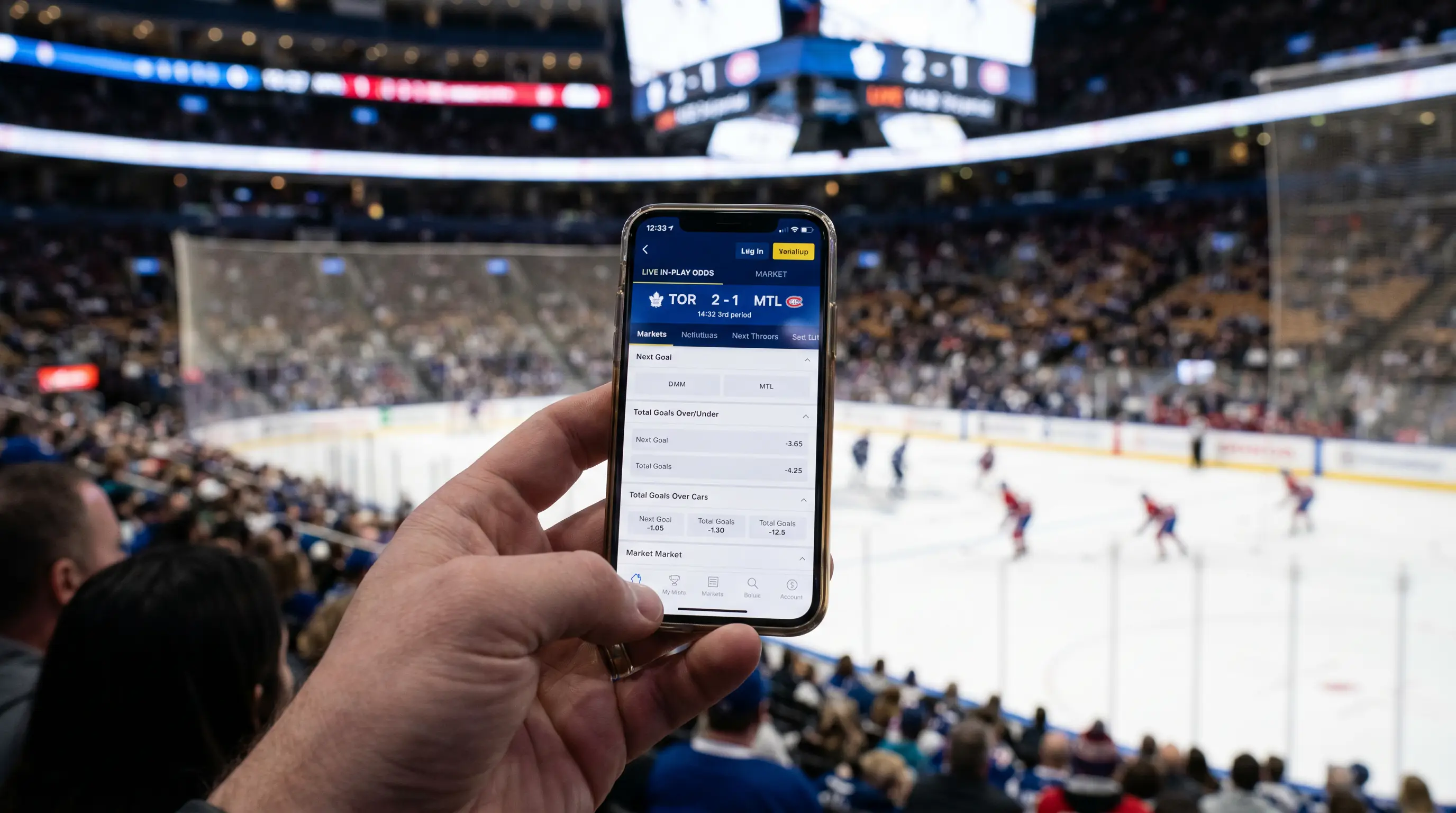
Visual presentation is the third factor. A live betting interface that shows shot counts, power play status, and time remaining without requiring you to toggle to a separate stats screen is vastly more efficient than one that only displays the score. You should not have to open a second tab to know whether a team is on the power play before placing a live wager.
Hockey Live Betting Questions
What is the best time during an NHL game to place a live bet?
The strongest opportunities tend to arise during period breaks, immediately after power plays expire, and during empty-net situations in the final minutes. Period breaks give you time to assess the flow and shot metrics before committing. Post-penalty moments often produce momentary mispricings as the live odds snap back from the power play adjustment.
Do UK bookmakers offer live betting on EIHL matches?
Live betting on EIHL matches is available at some UK bookmakers, but the coverage is far less comprehensive than for NHL games. The live market depth for EIHL is usually limited to the moneyline and basic totals, without the granular props and period-specific markets offered for NHL. Check your bookmaker’s in-play schedule on game day to confirm availability.
