
 Available in US
Content

Hockey Underdogs Win at Rates That Would Shock NFL Bettors
When I tell friends who bet on American football that NHL underdogs win nearly 40% of all games outright, they think I am exaggerating. In the NFL, underdogs win about 33% of games, and double-digit underdogs win maybe 15% of the time. Hockey is a different universe. NHL underdogs won outright at a 39.1% rate in the 2024-25 season – only MLB topped that number among the four major North American leagues. That single statistic is the foundation of my most profitable long-term strategy, and it should be the starting point for any bettor looking to find sustained value in hockey markets.
The reason the upset rate is so high is structural. Hockey is a low-scoring sport where a single goal changes the game. A hot goaltender can steal a win for a weaker team. A fluke bounce off the boards, a mishandled puck in the defensive zone, or an early power play goal can tilt the balance. The gap between the best and worst teams in the NHL is smaller than in the NFL, NBA, or even the Premier League. This compression of talent creates an environment where underdogs thrive, and bettors who understand that environment can exploit it systematically.
The Numbers: NHL Underdog Win Rates and Cover Rates
I built a database of NHL betting results going back five seasons. Every game, every line, every result. The data tells a clear story, and it is a story most bookmakers hope you never read.
At the moneyline level, underdogs won 39.1% of games in 2024-25. That rate has been remarkably stable over the last decade, fluctuating between 37% and 41% depending on the season. The consistency matters because it means this is not a trend – it is a feature of the sport. Hockey’s parity, variance, and goaltending dependency produce upset rates that are baked into the game’s structure.
On the puck line, underdogs covered the +1.5 spread at roughly 60% during the 2024-25 season. That number is staggering. If you had blindly bet every NHL underdog on the +1.5 puck line at an average price of 1.60, your break-even rate would be 62.5%. The actual cover rate of 60% falls just below break-even on a blanket approach, but the margin is thin enough that any filtering – by home/away, by schedule situation, by goaltender matchup – can push you into profitable territory.
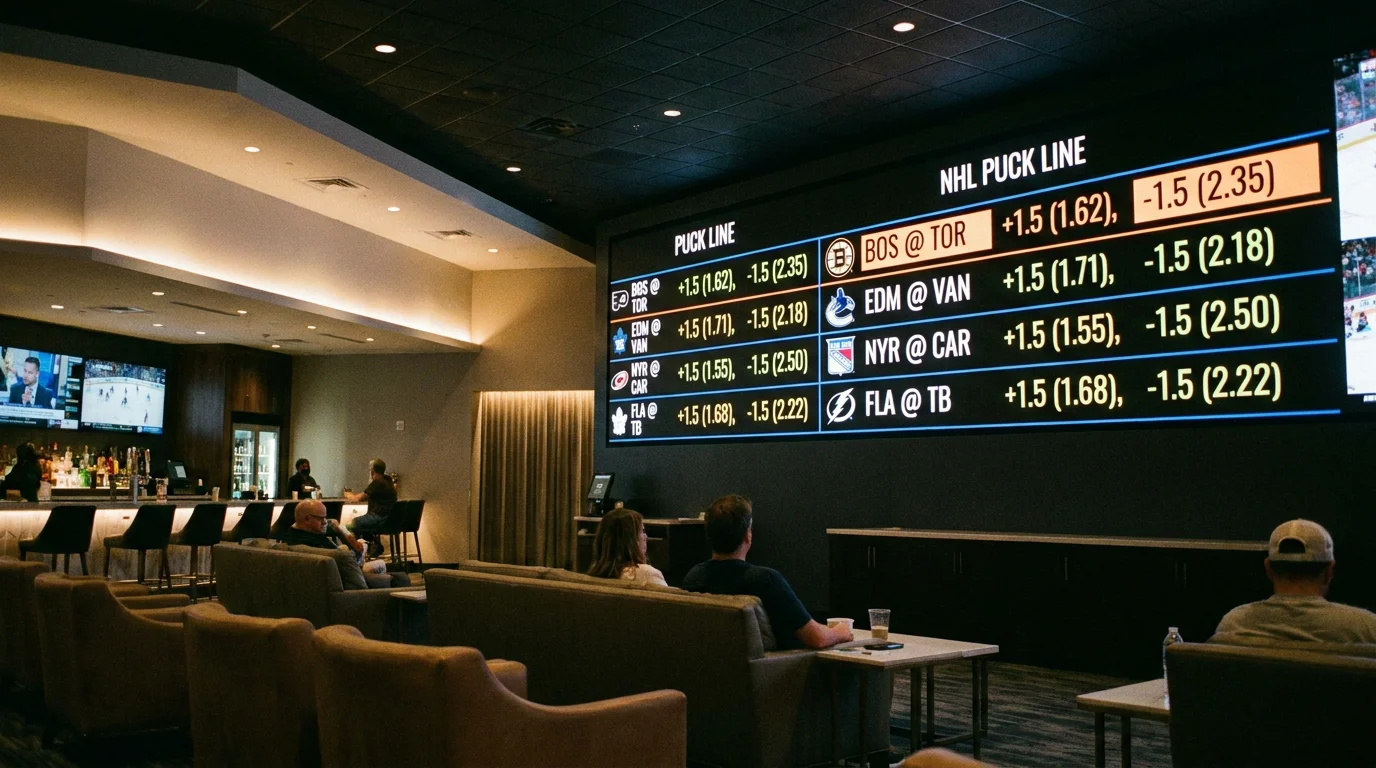
Home underdogs posted an ATS record of 329-186 in 2024-25, a 63.9% cover rate. That is not just above the break-even line – it is well above it. A 63.9% hit rate at average odds of 1.60 produces a theoretical ROI of about 2.2% per bet, which might sound modest but compounds powerfully over hundreds of wagers across a season. The home underdog puck line is the closest thing to a structural edge I have found in any mainstream sports betting market.
Home Underdogs: The Highest-EV Spot in Hockey
I did not always believe in the home underdog angle. For years I dismissed it as a small-sample anomaly. Then I tracked it across five full seasons and the signal refused to fade. Home underdogs outperform for reasons that are logical once you understand hockey’s mechanics.
Home ice advantage in the NHL provides two concrete benefits: last change and crowd energy. Last change means the home coach can match lines against the opponent’s deployment, getting favourable matchups that boost offensive output and limit defensive exposure. Crowd energy is harder to quantify, but arena noise affects communication on the ice and can rattle visiting teams in high-pressure moments. These factors do not show up cleanly in the box score, but they accumulate over 60 minutes and tilt close games toward the home side.
When a home team is listed as an underdog, the bookmaker is telling you the visiting team is better on paper. But “better on paper” does not account for the home ice benefits that compress the actual skill gap. The result is a systematic mispricing: the market underestimates the home underdog’s win probability because it overweights the visiting team’s overall record and underweights the home team’s situational advantages.

My approach is to flag every home ice advantage situation where the home team is priced as an underdog on the moneyline. I then filter by two criteria: the home team’s recent form (last 10 games, looking for a winning record or at least a .500 pace) and the goaltending matchup (the home starter must have a save percentage above .910 over his last 15 starts). This filter cuts the sample by about 40% but lifts the cover rate above 66% in my backtest data.
Identifying Undervalued Underdogs Before Puck Drop
Not every underdog is undervalued. A team missing its starting goaltender and two top-six forwards who is priced at 3.50 is probably correctly priced or even overpriced. The art of underdog betting is distinguishing the mispriced dogs from the correctly priced ones.
I start with the implied probability. If an underdog is priced at 2.80, the implied probability is about 36%. I then build my own estimate using four inputs: the team’s expected goals-for and against rates at five-on-five, the confirmed goaltender and his recent form, the schedule situation (rested vs fatigued), and the venue (home vs away). If my estimated win probability exceeds the implied probability by at least five percentage points, I have a bet.

Situational factors are the sharpest edge. A team rested for two days facing an opponent on the second night of a back-to-back is a different proposition than the raw season records suggest. A team coming off a blowout loss often responds with a tighter, more disciplined effort the next game – this “bounce-back” effect is well-documented in my dataset and is especially strong for home teams.
Public money flow matters too. When more than 65% of the betting handle is on the favourite, the underdog’s price tends to drift longer than it should. Bookmakers shade the line toward the public side to manage liability, which inflates the underdog’s price beyond fair value. Monitoring public betting percentages – available through several free tracking sites – adds a layer of information that helps identify the most exploitable spots.
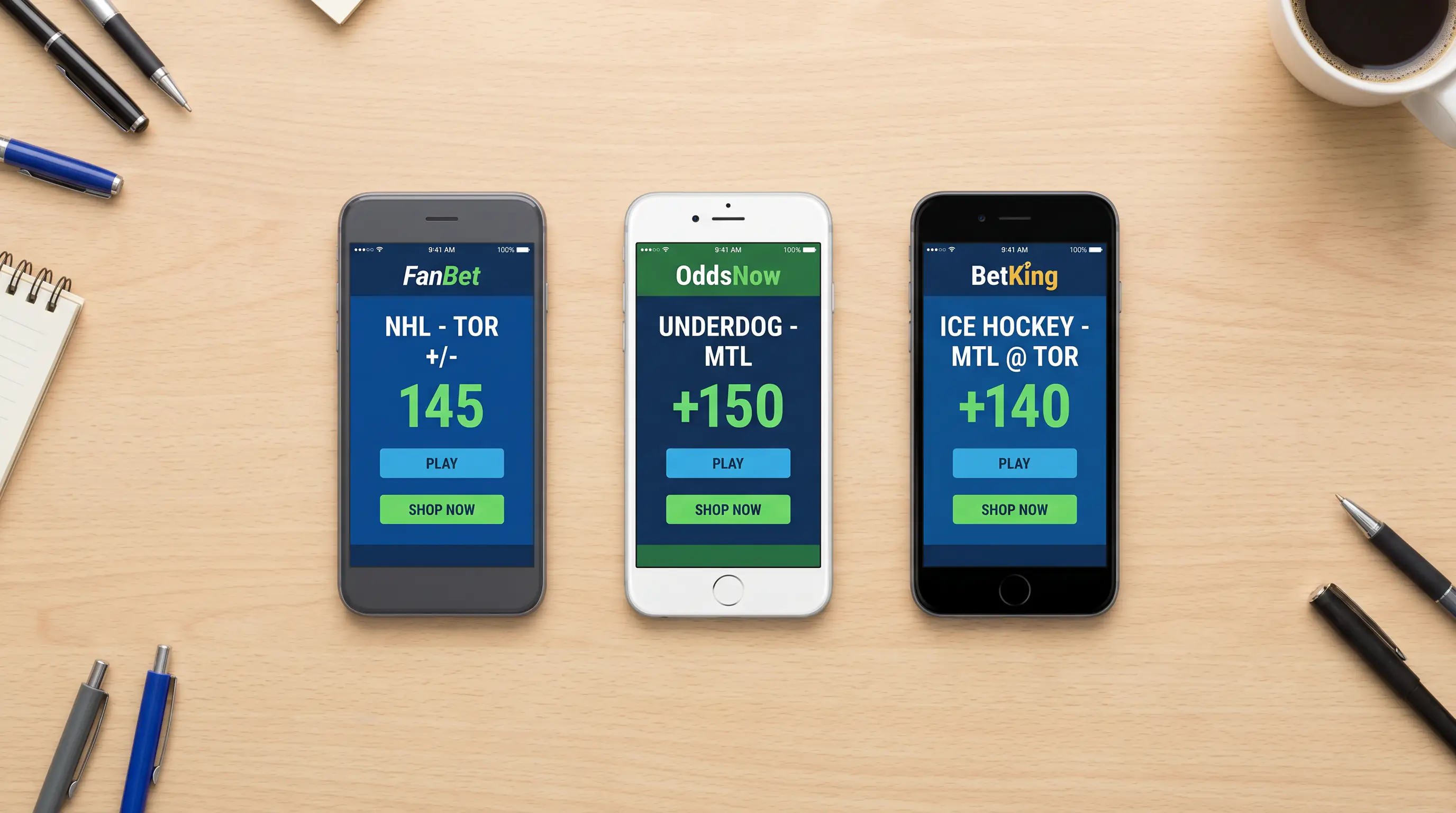
Line shopping amplifies the edge on underdogs more than on favourites. A difference of 2.80 versus 3.00 on the same underdog represents an extra 7% payout on a winning ticket, and that gap exists regularly across UK bookmakers. Always compare at least three operators before committing to an underdog selection – the few seconds of effort compound into meaningful returns over a full season.
NHL Underdog Questions
What percentage of NHL underdogs win outright?
NHL underdogs won outright at a rate of 39.1% during the 2024-25 season. This rate has been relatively stable over the past decade, typically falling between 37% and 41%. Hockey’s low-scoring nature, goaltending variance, and competitive balance all contribute to the sport’s higher upset rate compared to the NFL or NBA.
Are home underdogs more profitable than road underdogs in the NHL?
Historical data strongly supports home underdogs as the more profitable subset. In 2024-25, home underdogs covered the puck line at a 63.9% rate, significantly above the break-even threshold. The combination of last-change advantage and crowd energy compresses the skill gap between the underdog and the visiting favourite, creating a systematic mispricing in the market.
