
 Available in US
Content

NHL Futures Lock In Value Months Before the Playoffs
In September 2024, I placed a futures bet on a team to win the Western Conference at 14.00. By March, they were the second seed and the price had collapsed to 4.50. I did not need them to actually win the conference for that bet to validate the process — the value was captured the moment the line moved. That is what futures betting is really about: identifying mispriced long-term odds before the market corrects. NHL revenue for the 2025-26 season is projected between $7.5 billion and $8 billion, and that financial growth translates directly into deeper futures markets with more options for bettors.
Futures markets in the NHL cover everything from the Stanley Cup winner to conference champions, division winners, individual award recipients, and season point totals. The thread connecting all of them is time. You are placing a bet months before the outcome is known, which means the price must compensate you for the capital being locked up and for the uncertainty inherent in a long season. When the price does compensate you sufficiently, futures bets offer some of the best risk-to-reward ratios in all of sports betting.

Types of NHL Futures Markets
I keep a dedicated spreadsheet for futures that I update after every major event: free agency, the draft, pre-season, trade deadline, and the playoff bracket reveal. Each event reshapes the market, and the bettors who profit are the ones who act before the reshaping, not after. The NHL salary cap is set at $95.5 million for 2025-26 and is estimated to rise to $104 million in 2026-27 and $113.5 million in 2027-28 — a 25%-plus spike over three years. That cap trajectory matters enormously for futures because it determines which teams can add talent and which are forced to shed it.
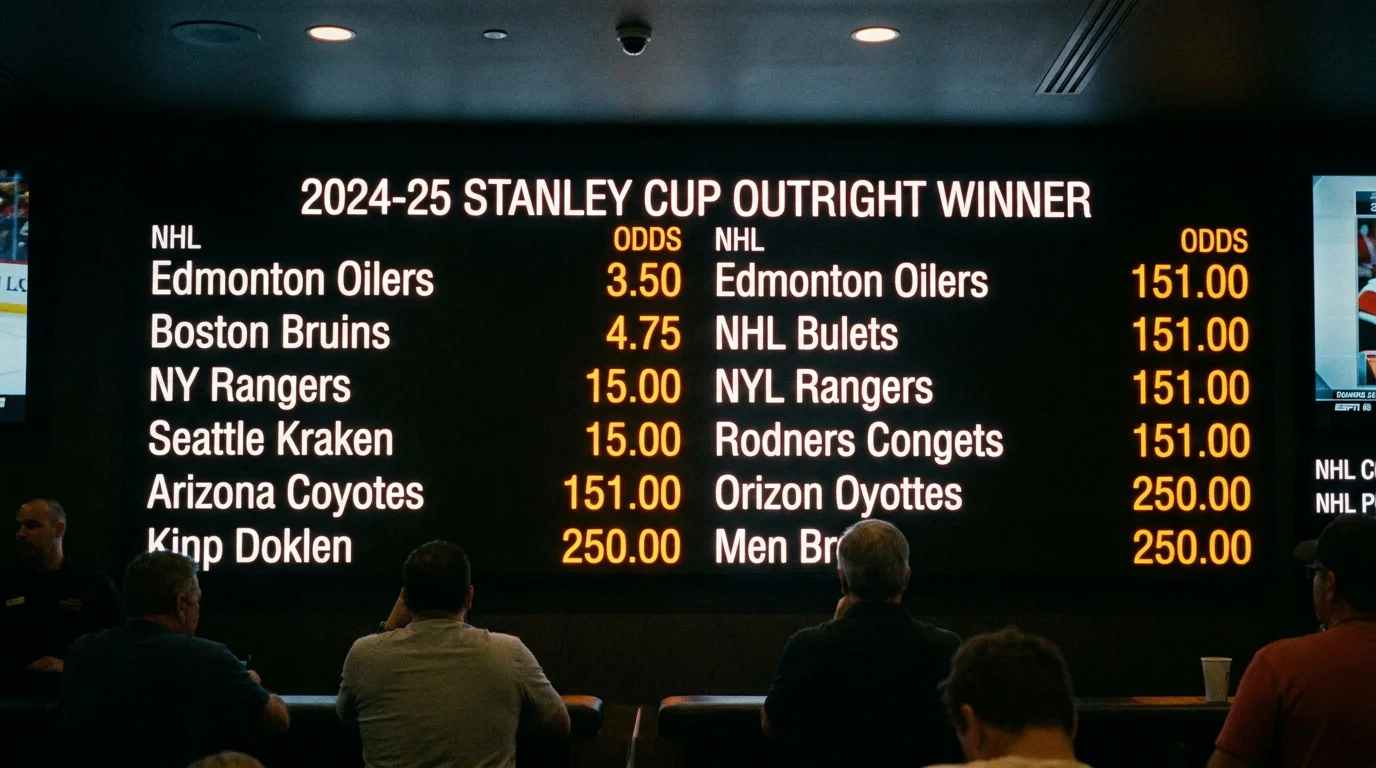
The Stanley Cup outright is the flagship futures market. Every UK bookmaker with hockey coverage offers it, typically listing all 32 teams with prices ranging from 4.00 for pre-season favourites to 200.00 or longer for the league’s weakest sides. I focus on teams priced between 8.00 and 25.00 — the “contender tier” where you get meaningful upside without betting on a miracle. The Stanley Cup betting market is deep enough to warrant its own analysis, but the key insight for general futures betting is that the outright winner market tends to be the most efficiently priced because it attracts the most sharp money.
Conference winner and division winner markets are less efficient. These attract less volume, which means bookmaker margins can be wider but also means the prices adjust more slowly to new information. I have found that conference winner bets placed in the first week of the season offer the best raw value because the market has not yet absorbed the early-season signal of which teams are real contenders and which pre-season hype was overblown.
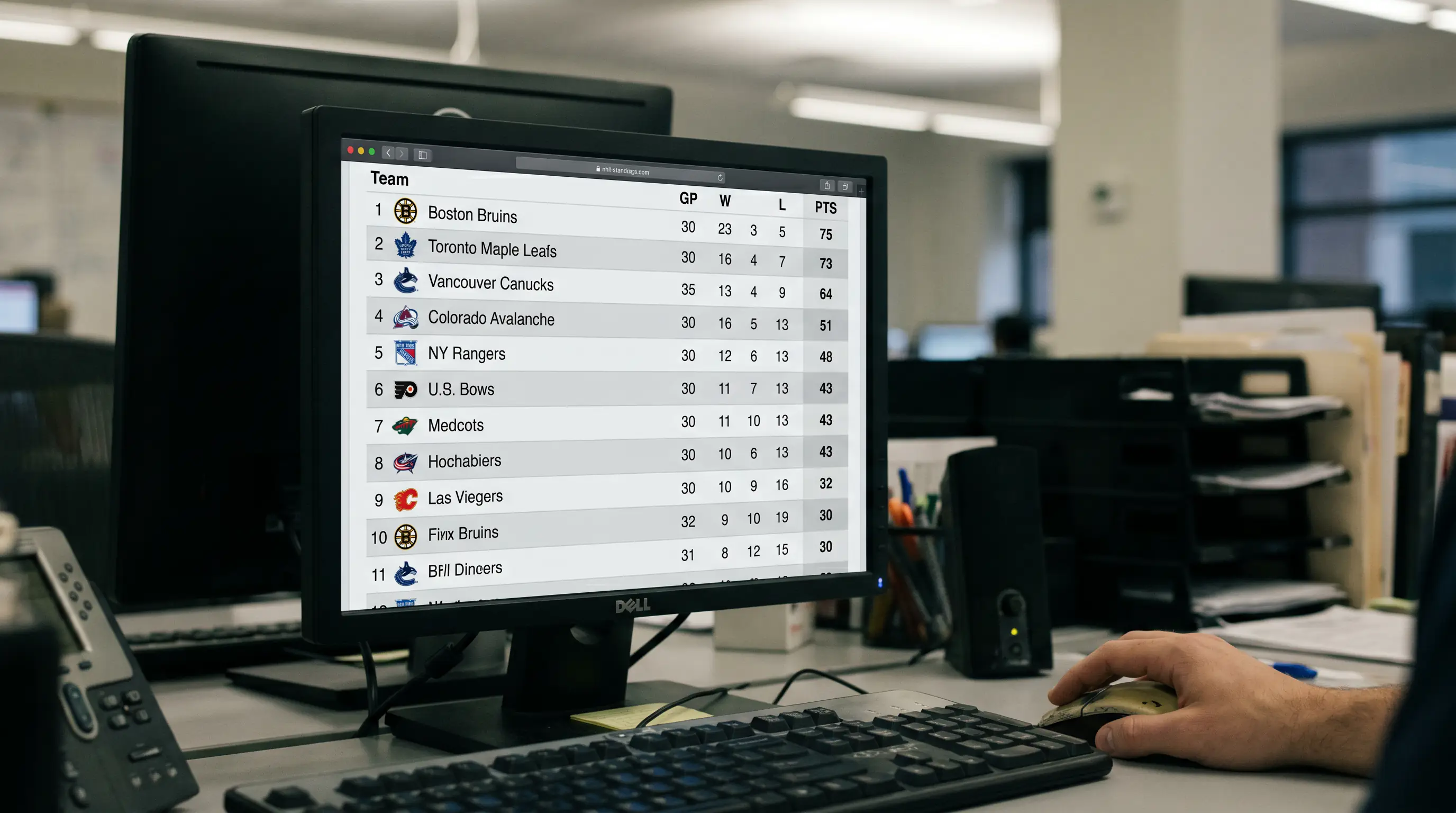
Season point totals — over/under on how many standings points a team accumulates — are the futures market where analytical bettors have the most edge. These lines are set based on pre-season projections, and a 10-game sample can reveal whether a team is materially better or worse than expected. If a team was lined at 96.5 points and they start 8-2-1, their point pace suggests 110+. The over becomes a much stronger proposition, and some bookmakers are slow to adjust the cash-out value.
When to Place NHL Futures: Early vs Mid-Season vs Post-Deadline
Timing is the one variable in futures betting that you control completely, and most bettors get it wrong. The conventional wisdom says to bet early for the longest odds. That is partially true but dangerously incomplete.
Early-season futures — placed before the season starts or within the first two weeks — give you the best raw prices. A team at 18.00 in October might be 10.00 by December. But you are also betting with the least information. Injuries, coaching changes, and slow starts can torch a pre-season futures ticket before Thanksgiving. I allocate about 30% of my annual futures budget to pre-season bets, spread across three to five teams I believe are underpriced based on off-season moves and roster depth.
Mid-season is where the real edge lives. By January, you have 40+ games of data. You can see which teams’ advanced metrics (expected goals, Corsi, high-danger chance rates) are sustainable and which are riding unsustainable shooting percentages. Teams whose records lag their underlying metrics are often underpriced in the futures market because the public anchors to win-loss records, not process indicators. I place another 40% of my budget in the December-to-February window.
The final 30% goes to post-trade-deadline bets. The deadline reshuffles rosters, and the futures market overreacts to splashy acquisitions while underreacting to quiet depth additions. A team that adds a solid third-line centre and a penalty-killing defenceman might not move the needle in public perception, but the analytical impact on their playoff profile can be significant.
Betting on NHL Individual Awards
Awards futures are the wildcard in my portfolio. The Hart Trophy (MVP), Vezina Trophy (best goaltender), Norris Trophy (best defenceman), and Calder Trophy (best rookie) all have betting markets at most major sportsbooks. The prices are longer and the markets are thinner, which means bigger edges and bigger variance.
I focus on the Calder Trophy because it is the most predictable. Rookie performance is heavily influenced by opportunity — ice time, power play deployment, line placement — and those factors are visible within the first month of the season. A rookie playing 18+ minutes per game on a competitive team’s top six has a structural advantage over one buried on the fourth line, regardless of raw talent. The market sometimes ignores deployment context, pricing the more “hyped” prospect over the one with better usage.
The Vezina is my second-favourite awards market because goaltender performance stabilises faster than skater performance over a season. A goaltender with a .930 save percentage through 30 starts is not getting lucky — that is signal. By mid-January, you can identify two or three legitimate Vezina candidates and often find one of them at a price the market has not yet compressed. The Hart Trophy is the toughest to predict because voters weight team success alongside individual performance, making it partly a narrative award — and narrative is harder to model than on-ice metrics.

NHL Futures Questions
Can I cash out an NHL futures bet early at UK bookmakers?
Many UK bookmakers offer cash-out options on NHL futures, though the availability varies by operator and market type. Stanley Cup outrights are most likely to have cash-out enabled. The cash-out value is typically less favourable than the theoretical value of your bet because the bookmaker builds in a margin on the cash-out price.
How does the NHL salary cap affect futures odds during the season?
The salary cap constrains which teams can add or retain talent. Teams pressed against the cap ceiling have less flexibility at the trade deadline, which limits their ability to improve. Teams with cap space can acquire impact players, strengthening their roster and potentially shortening their futures odds. Tracking cap space is a valuable input for futures analysis.
