
 Available in US
Content

No Position in Team Sports Moves Betting Lines Like an NHL Goalie
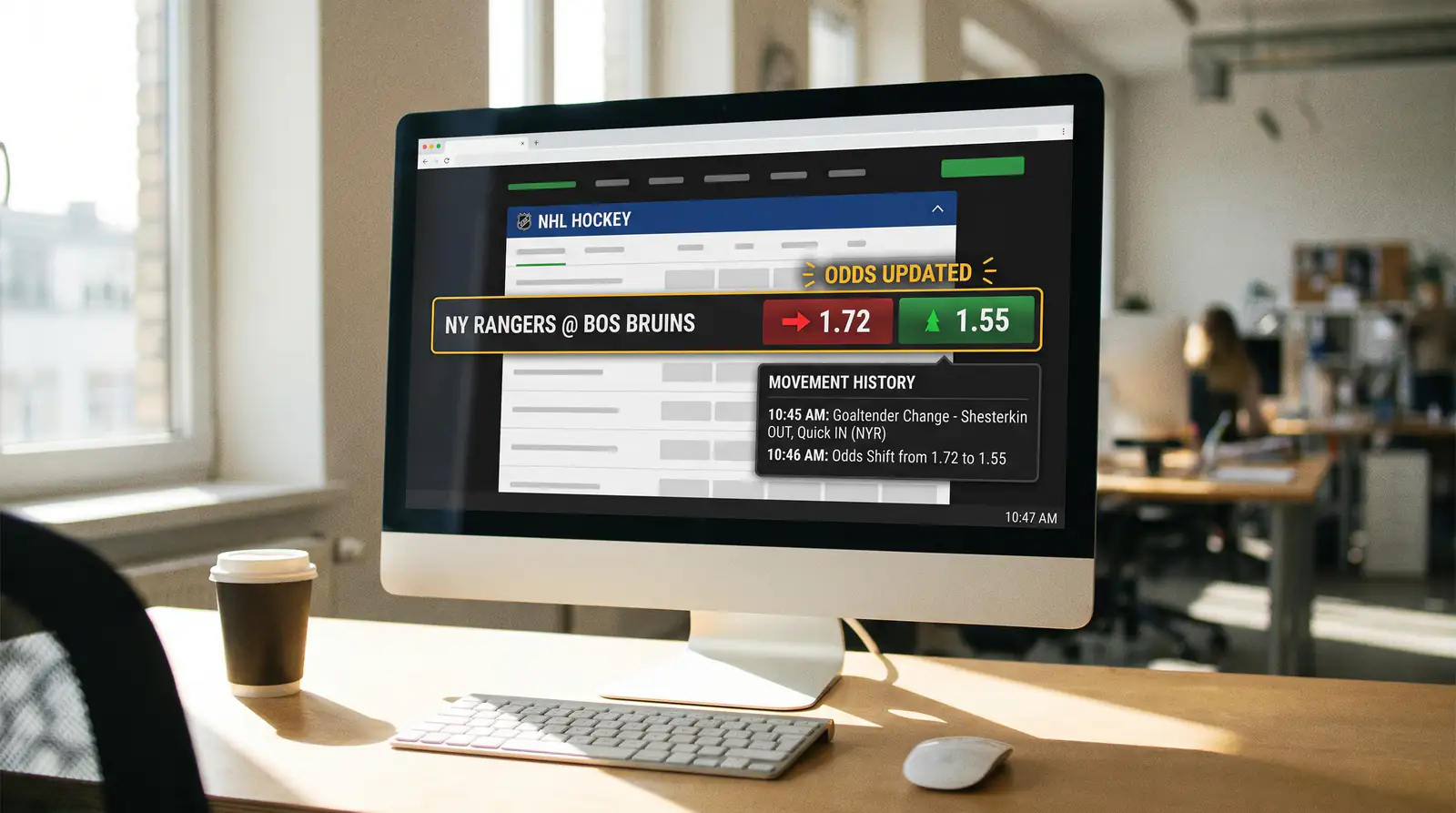
I once watched a moneyline shift from 1.72 to 1.55 in the span of 20 minutes. No injury report. No weather change. No lineup announcement for any skater. The only thing that happened was the confirmation of a starting goaltender. In no other major team sport does a single player’s availability move the line that dramatically. A quarterback announcement in the NFL might shift a spread by a point or two. A goaltender confirmation in the NHL can swing the implied probability by 10 percentage points or more.
The goaltender touches the puck more than any other player, faces the most direct pressure, and has the most binary impact on the outcome. A .930 save percentage goaltender and a .895 save percentage backup facing the same shots will produce starkly different final scores. Understanding how goaltending shapes betting lines is not optional for serious hockey bettors – it is the single most important variable in your toolkit.

Key Goaltender Metrics for Bettors: SV%, GAA, and QS%
Save percentage is the headline number, but it needs context. A goaltender’s raw SV% does not tell you whether he faced 25 shots or 40, whether those shots were high-danger chances or perimeter wristers, or whether his team collapsed defensively in front of him. I use three goaltender metrics in combination, and each serves a specific purpose.
Save percentage at five-on-five is my primary metric. By stripping out power play and shorthanded situations, you isolate the goaltender’s performance in the most common game state. A goaltender with a .928 five-on-five SV% is elite regardless of what his overall SV% looks like, because the five-on-five number is less contaminated by special teams quality. NHL gate receipts were at 96% of arena capacity in the 2024-25 season, and that level of in-person engagement means goaltending performance is scrutinised more intensely than ever – which is good for bettors because the data is widely available.
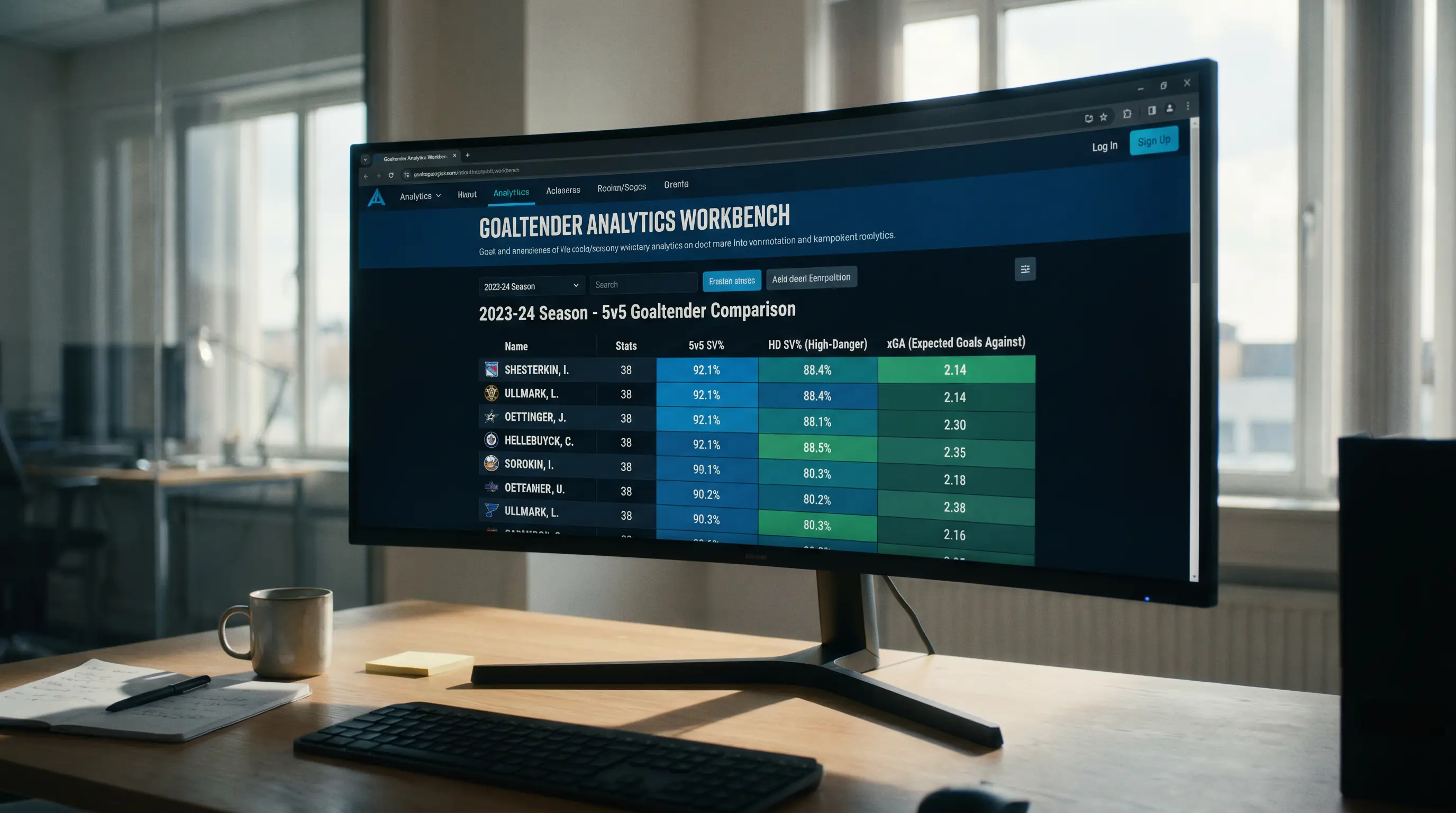
Goals against average is a complementary metric. GAA reflects not just the goaltender’s performance but the defensive quality in front of him. A goaltender behind a top-five defensive team might post a 2.30 GAA while one behind a bottom-five team posts 3.10 – even if the underlying save percentages are similar. I use GAA to assess team-level defensive context rather than goaltender quality in isolation.
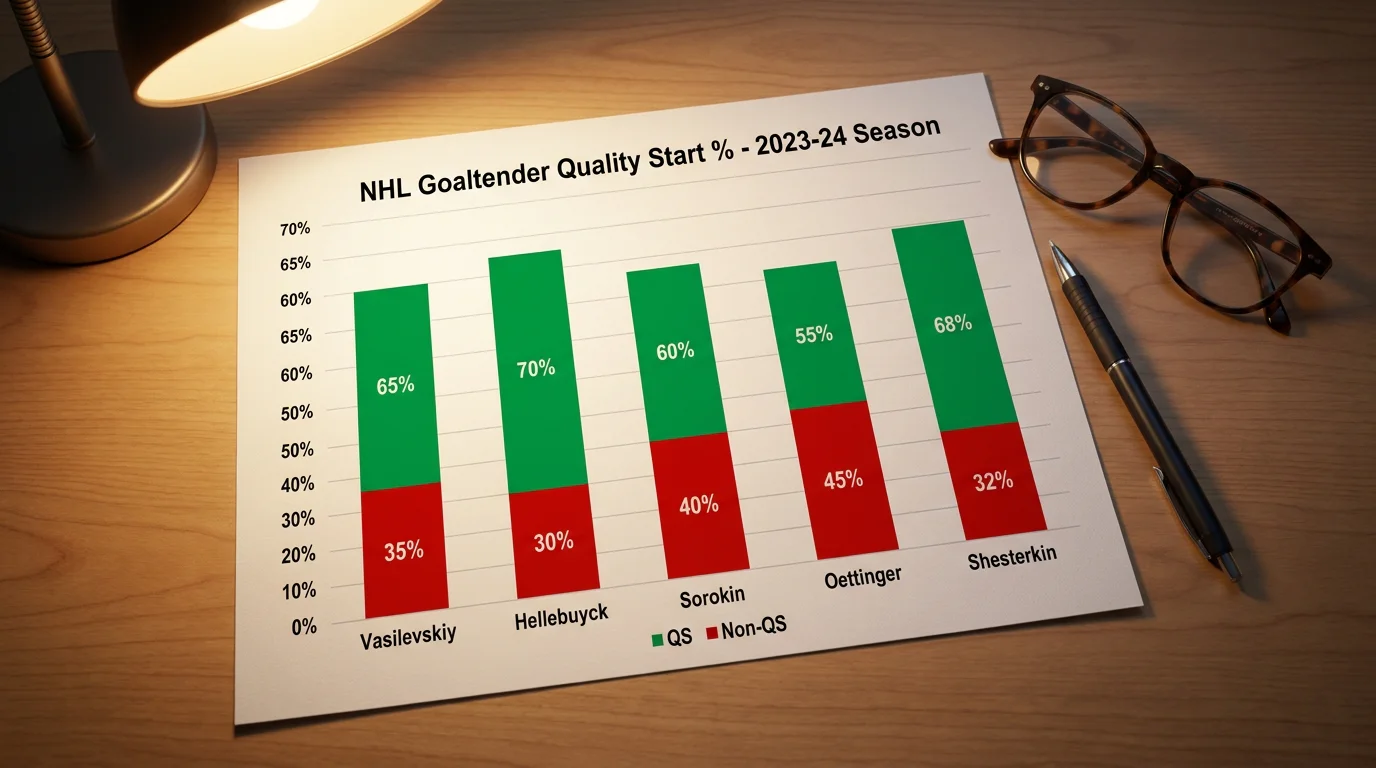
Quality start percentage tells me how often a goaltender delivers a league-average or better performance. A quality start is defined as any game where the goaltender posts a save percentage above the league average for that game’s shot volume. A goaltender with a QS% above 55% is reliable. Above 60% is excellent. Below 50% signals inconsistency that creates risk for bettors backing that team. The 2024-25 NHL season saw over 23 million fans attend games, and that audience increasingly follows goaltender stats through public-facing analytics sites, making these numbers part of the mainstream discourse.
How Goalie Announcements Shift NHL Lines
Goaltender confirmations typically come between 10:00 and 11:30 AM Eastern on game days, following the morning skate. Some coaches confirm earlier – the night before, in pre-game media sessions – but the majority wait until the morning. The window between goalie confirmation and puck drop is the most active period for NHL line movement, and it is where informed bettors make their moves.
When a team’s starting goaltender is confirmed and he is the expected number-one, the line usually holds steady or moves marginally. The market has already priced in the assumption that the starter will play. The big moves come when the unexpected happens: the backup gets the start, the starter is scratched with an undisclosed injury, or a recently recalled prospect is thrown into the net. These surprise announcements shift lines by 10-20 cents on the decimal odds, which translates to significant value for bettors who react quickly.
I have an alert system set up through social media that notifies me the moment any verified reporter confirms a goaltender start. Speed matters because the line adjustment happens within minutes. If I see a backup confirmed for a team that was priced as a 1.60 favourite, I know the line will drift to 1.70 or higher within the hour. If my pre-game analysis already flagged the opponent as a potential play, the backup confirmation is the trigger to act before the price moves.
The connection to totals markets is equally important. A backup goaltender start lifts the game total because expected goals against increases. If the total was set at 6.0 with the starter and the backup is confirmed, the total might move to 6.5 or the odds on the over 6.0 will shorten. Bettors who spot the backup confirmation before the total adjusts can capture value on the over.

Exploiting the Backup Goalie Start
Backup goaltender starts are the highest-value situational play in my NHL betting repertoire. The logic is straightforward: the line was set with the starter in mind, the backup is confirmed, and the line adjusts – but often not enough to fully reflect the quality gap.
Gary Bettman has noted that you cannot get away with cheating in modern hockey – the integrity systems are too robust, and players compete genuinely every night. That authenticity means backup goaltenders are truly trying their best, which makes the gap between them and starters a reflection of skill rather than effort. The skill gap is significant: the average NHL starter has a career SV% about 10-15 points higher than the average backup, and that gap translates directly into expected goals.
My playbook for backup starts involves two main approaches. First, I look to back the opposing team – the one facing the backup – if they are priced as slight underdogs or short favourites. The line adjustment after the backup confirmation often does not fully price in the degraded goaltending, especially if the backup is a recently recalled AHL goaltender rather than an established NHL backup. Second, I look at the game total over, particularly if the backup’s recent save percentage is below .900 in his last five appearances. Both angles have produced positive ROI across my tracking history.
One caution: not all backup starts are equal. A veteran backup who has played 25 games that season and carries a .908 SV% is a very different proposition than a rookie making his second career start. I rate each backup start on a three-tier scale – “high-quality backup,” “average backup,” and “emergency start” – and size my bets accordingly. Emergency starts get the largest allocation because the market is least prepared for those situations.

Goaltender Betting Questions
How important is the starting goaltender for NHL betting?
The starting goaltender is the single most impactful variable in NHL betting. Goaltender confirmations can shift the moneyline by 10-20 cents in decimal odds and move the game total by half a goal. A team’s expected performance with a .930 SV% starter versus a .895 backup is dramatically different, and bettors who track goaltender announcements gain a meaningful informational edge.
Where can I find confirmed NHL goalie starts before a game?
Confirmed starting goaltenders are typically reported by verified NHL beat reporters on social media between 10:00 and 11:30 AM Eastern on game days, following the morning skate. Several hockey analytics websites aggregate these confirmations into a single daily page. Setting up notifications for reliable reporters is the fastest way to get the information.
